
Regional & Urban Strategy
Service > Create a strong local community
As our world is changing rapidly, we need to ensure our regions and communities can adapt quickly enough to ensure they can flourish. Except works on strategies and implementation on these cross-disciplinary issues, which include policy, climate adaptation, local economies, marketing, community building and environmental improvement.
Innovation on Location
We have developed a specialized method to find exactly those solutions for an area that solve local problems while providing beneficial results.
The first project we succesfully implemented this approach was in 2001, where an innovative approach using an algae plant could lift a community out of economic dispair. Since then, we've exectured our method on a wide variety of areas, communities and situations, each time yielding unique solutions with remarkable results.
We endeavour to make this new way of working accessible to all city councils, development organizations, states and provinces that want to truly move forward.
Adaptive approach
Each location is different, with its own unique set of opportunities, culture, problems and possible pathways towards a bright future.
Some areas grow, others shrink, some simply change. Whatever the dynamics, there are ways to improve local conditions, regional resilience and a more strategic and effective set of policies and actions to improve our living environments and economies.
Local experience, global knowledge
With over a decade of experience working from the national to the local scale, we bring global knoeledge from working on four continents and combine it with local expertise.
This way, we are sure to provide the best alternatives that will work for a long time, can adapt to changing conditions, and add value for all involved parties.
Scope
Our services for regional and urban strategy focus on:
- Strong local economies
- Community identity and health
- Flourishing and embedded ecosystems
- Efficient transport
- Recreation and cultural interaction
- Closed loop metabolisms
- Urban and regional agriculture and industry
Examples
Growth-Planning Area Planning & Development
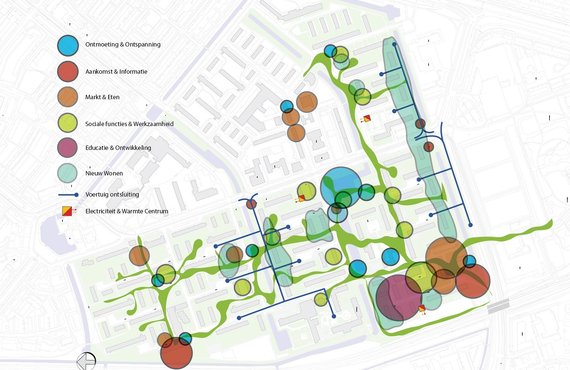
Growth Planning introduces an entirely new approach to area planning and urban design. Rather than defining specific programmatic requirements, Growth Planning instead applies socio-economic impulses to the area within certain performance edge conditions. It revolutionzes the task of city design by requiring the urban fabric to organically respond to social and economic stimuli, and allows for increased value, quality, and development over time.
Born out of the necessity to start thinking differently about our built environment due to economic, social and environmental constraints, Except has worked on refining this new form of planning since 2005.
Shanghai Urban Masterplan
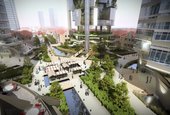
This masterplan transforms downtown Shanghai into a fully sustainable community, in energy, food, water, and jobs, designed for Expo 2013. The plan strategically interweaves sustainable innovation with exciting urban design, and making it run with urban agriculture, sustainable technologies and vertical farms. The result is a valuable and beautiful urban community, an emergent circular economy, and a future-proof investment.
The Shanghai urban master plan demonstrates the Urban Renaissance approach on a specific site adjacent to Nanjing road, incorportating a historic Lilong housing district.
Netherlands CO2040
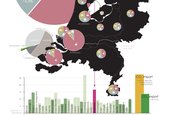
What key projects are necessary to make the Netherlands CO2 neutral in 2040? That was the central and massive question put before Except and Posad by the Dutch ministry.
By applying network and system-analysis a surprising single answer was found: a more transparent, decentralized and accessible data-system is needed to make this happen.
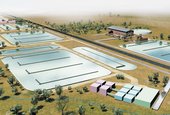
Merredin Health Industries Spirulina Plant
The Merredin Spirulina plant, developed in the year 2000, is one of the first projects in which we applied systems thinking and our holistic, systemic approach to innovation, using ecology as a main component.
The result is a highly unusual but stunningly effective business case for a sustainable, ecological industry to revive a desert town in Australia.
This project is a testament to the strength of holistic, systemic approaches. For this reason, we documented the project extensively on this page, indluing the conception process, business case and design of the plant. For more detail, feel free to contact us.
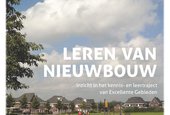
Exemplary Neighborhoods
Under the name of Excellent Areas ("Excellente Gebieden"), a number of Dutch home construction companies and municipalities are engaged in an experiment to use the building standards of 2015 and 2020, today. By the nature of these future building standards, there is much to learn for these actors before they can profitably apply them.
AgentschapNL is the facilitator of the Exemplary Neighborhoods project, and they asked us to evaluate the instruments they have set up for the learning trajectory.
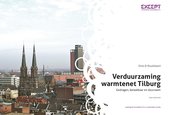
District heating vision Tilburg
This project researches a sustainable district heating system in the Dutch city of Tilburg, developed with our consortium partners.
The vision includes both ecological and social sustainability, and functions as the starting point for all parties involved to cooperate toward a sustainable and carbon neutral heat provision.
Vision on Sustainable Public Transportation
How can public transportation contribute to resilient and sustainable cities and communities?
With a team of Public Transportation stakeholders and experts in the city region of Rotterdam we developed a vision on how this can be done. The vision came into being through several intense collaborative sessions, and is used to engage new stakeholders and move the agenda forward towards the most sustainable public transport system in the world.
Download the vision booklet below (sorry, only in Dutch).

Schiphol-Oost Pioneer Park
Amsterdam Schiphol Airport was born at Schiphol-Oost, over 100 years ago. Today it is a business park that could use more atmosphere and vision. With limited identity, it does not distinguish itself from other business parks in the surrounding area. In collaboration with Schiphol Real Estate (SRE), Except developed a vision and strategy for Schiphol-Oost for the coming 5 to 10 years. The vision transforms Schiphol-Oost to an innovation-garden for the entirety of Schiphol, named Pioneer Park.

Contact
Tom Bosschaert
Director
 [javascript protected email address]
 +31 10 7370215